Category: Holidays & Seasons

  • Thanksgiving Without the Rush: A Calm 3-Week Countdown to a Cozy Holiday

    Disclosure: I participate in the Amazon Associates Program. If you purchase through our links, we earn a small commission at no extra cost to you. This helps us keep our content free and independent.

    Thanksgiving falls on Thursday, November 26 this year, and that date is closer than it feels. The good news: starting in the first week of November turns the holiday from a frantic final week into a calm countdown. You do not need to do everything early – you just need to do the right few things each week, so Thanksgiving Day itself is mostly cooking, welcoming people, and sitting down at your own table.

    This is a gentle three-week plan: decide and order in week one, shop and prep in week two, and thaw, cook, and host with breathing room in week three. It works for a big family table, a small Friendsgiving, or a quiet two-person holiday.

    Roasted turkey on a Thanksgiving dinner table

    Photo by Monstera Production on Pexels

    Week 1 (now to Nov. 8): Decide, count, and reserve

    Start with people, not recipes. Confirm who is coming, ask about allergies and must-have dishes, and write the menu down – one main, three or four sides, one or two desserts, and drinks. A written menu stops the slow creep of “one more dish” that makes Thanksgiving exhausting.

    Order or reserve the turkey this week. As a guide, plan about 1 to 1.5 pounds of whole turkey per person if you want leftovers. If you are buying frozen, note its weight now, because thawing time in week three depends on it.

    Take stock of gear before you buy anything: a roasting pan that actually fits your bird, a reliable meat thermometer, oven bags if you use them, storage containers for leftovers, and enough chairs and serving spoons. A sturdy roasting pan with a rack and baster earns its space – it lifts the turkey so heat circulates, catches the drippings for gravy, and goes back in the cupboard for every Sunday roast after the holiday. Check what you own first, then fill only the real gaps.
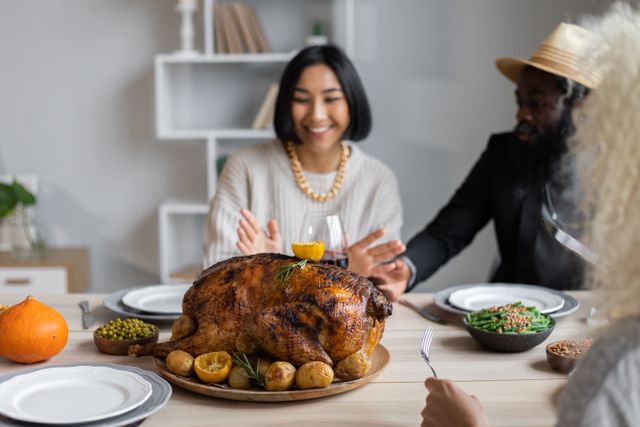
    Friends sharing a Thanksgiving dinner together

    Photo by Monstera Production on Pexels

    Week 2 (Nov. 9-15): Shop in two trips, set the table early

    Split shopping into two trips. This week, buy everything shelf-stable and freezable: broth, flour, sugar, spices, canned pumpkin, cranberries, butter for the freezer, and drinks. Next week is only for fresh food, which keeps the final shop short.

    Do the small home jobs now too. Clear one fridge shelf completely for the turkey and one for finished dishes. Wash the serving platters that live at the back of the cupboard. If you are decorating, keep it simple and in the style this year is leaning toward – natural textures, warm amber and cream tones, low arrangements you can see over. Real pumpkins left from Halloween (the uncarved ones), a linen runner, and candles will carry a table further than a cart of new decor.

    Set the table a full week early if you can spare the room. It sounds excessive until you have done it once: on Thanksgiving Day, a table that is already set makes the whole house feel calm, and it shows you early if you are short a plate, a glass, or a chair.

    Autumn table decor with pumpkins and candles

    Photo by Jill Wellington on Pexels

    Week 3 (Nov. 16-25): Thaw, prep, and protect your time

    Thawing is the step that decides whether the week feels easy. In the fridge, allow roughly 24 hours for every 4 to 5 pounds of turkey – a 16-pound bird needs about four days, so it should move to the fridge by Sunday, November 22 at the latest. Put it on a tray on the lowest shelf, and write the start date on a sticky note so there is no guessing.

    Prep in layers during this week: pie dough and cranberry sauce on Monday or Tuesday (both improve with rest), chopped sturdy vegetables and assembled casseroles on Wednesday, and only the delicate things – salad, whipped cream, reheating – on Thursday. Oven bags are a forgiving option for a first turkey or a dry oven: they keep the bird moist and make cleanup remarkably easy, which matters when the sink is already full.

    Keep a simple hot drink ready for helpers and early arrivals: an electric kettle heats water fast for tea, cider packets, or instant gravy insurance, and it keeps people gathered in the living room instead of crowding the cook.
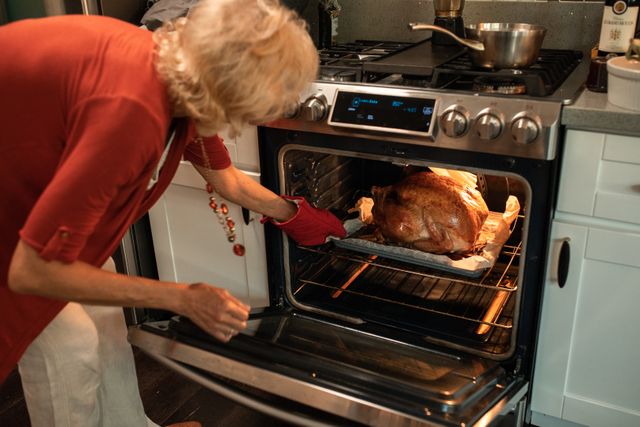
    Checking a roasted turkey in a home oven

    Photo by RDNE Stock project on Pexels

    Thanksgiving Day: a short, kind schedule

    Work backward from when you want to eat. If dinner is at 3 p.m., the turkey rests while sides reheat – resting is not optional; 30 to 45 minutes under foil makes carving easier and the meat juicier. Use a digital meat thermometer and trust it over the clock: 165°F in the thickest part of the thigh, without touching bone, is your finish line.

    Assign the last-hour jobs before the day arrives: one person on drinks and ice, one on reheating, one on the table, and you on carving. And build in your own pause – five minutes outside with a warm cup before guests arrive or after they sit down is a legitimate part of hosting.

    After the meal, leftovers go into clear glass containers within two hours, labeled with the date. Future you, opening the fridge on Friday, will be grateful for portions that are visible, stackable, and ready for sandwiches, soup, and the easiest dinner of the year.

    Pumpkin pie with pumpkins

    Photo by Christina Voinova on Pexels

    The takeaway

    Thanksgiving does not reward the host who does the most; it rewards the one who starts a little early. Decide this week, shop in two calm trips, thaw on schedule, and let the table be set before the cooking begins. The holiday is a meal with people you like – keep it that size, and it will feel like one.


    Shop this post

  • Fall Back This Weekend: A Gentle Guide to Daylight Saving Time Ending on Sunday

    Disclosure: I participate in the Amazon Associates Program. If you purchase through our links, we earn a small commission at no extra cost to you. This helps us keep our content free and independent.

    Alarm clock on a bedside table in morning light

    Photo by Ron Lach on Pexels

    Tonight, after the Halloween costumes come off, most of the United States gets a small gift: an extra hour. Daylight saving time ends at 2 a.m. on Sunday, November 1, 2026, when clocks move back one hour to 1 a.m. — so 1 a.m. happens twice. It is the earliest date the fall-back can fall, and it arrives right after Halloween, which makes this weekend feel longer in the best way — if you handle it gently.

    An extra hour sounds simple, but our bodies notice the shift. Evenings get dark earlier, mornings get brighter sooner, and for a few days sleep, hunger, and energy can feel slightly out of step. This guide is a calm, practical plan for the weekend and the week after: what to do tonight, how to sleep well, how to use morning light, and how to make earlier evenings feel cozy instead of gloomy.

    1. Tonight: set it up before you are tired

    Do the small jobs on Saturday evening, not at 2 a.m. Most phones and computers update themselves, but ovens, microwaves, wall clocks, car clocks, and some alarm clocks do not. Walk through the house once, set those back one hour before bed, and you will wake up on Sunday with no second-guessing.

    Tonight is also a good moment for two quick safety checks that many fire departments recommend at every clock change: test smoke and carbon monoxide alarms, and replace batteries if needed. It takes ten minutes, and tying it to the clock change means you never have to remember a separate date.

    If you celebrated Halloween, keep tonight simple: sort the candy, put a portion away for later in the week, and let the evening wind down earlier than usual. Your body will thank you tomorrow.

    Person waking and stretching in bed with sunlight

    Photo by cottonbro studio on Pexels

    2. Sleep: use the extra hour, do not spend it all at once

    The kindest way to use the extra hour is to split it. Go to bed close to your normal time, let yourself sleep a little longer in the morning, and avoid one very late night followed by a crash. A consistent wake time — even on Sunday — helps your body settle into standard time within a few days.

    Make the bedroom work for you this week. Earlier darkness can make us sleepy too early in the evening and then wide awake at 3 a.m. Keep the bedroom dark and cool for the actual sleep hours: blackout curtains help block street light and early dawn, and a comfortable sleep mask is useful if you share the room or nap during the day. Keep screens dim in the last hour before bed, and if you wake in the night, keep lights low so your body does not think morning has arrived at 1 a.m. — the first 1 a.m., or the second one.

    3. Morning light is the reset button

    Light is the strongest signal for your body clock, and fall-back week is when to use it on purpose. Get outside or sit by a bright window within an hour of waking, even for 15 to 30 minutes. A morning walk is ideal: it combines light, gentle movement, and fresh air, and it makes the earlier sunset feel less abrupt.

    Morning walk in autumn light in a sunlit park

    Photo by Filip Marcus Adam on Pexels

    Cloudy week or an early work start? A bright light therapy lamp at breakfast can help you feel more awake on dark mornings, and a sunrise alarm clock makes waking before dawn gentler by gradually brightening the room instead of starting the day with a harsh beep in the dark. Neither replaces daylight, but both make November mornings noticeably easier.

    4. Make earlier evenings a feature, not a flaw

    Cozy evening at home with warm lamp light and armchairs

    Photo by Tasso Mitsarakis on Pexels

    Sunset will suddenly arrive an hour earlier, and the first few evenings can feel surprisingly long. Plan for that instead of fighting it. Move walks and errands earlier when you can, and make the indoor hours deliberate: a real dinner at the table, a board game, a film, a chapter of a book, a warm drink.

    A caffeine-free herbal tea in the evening is a small ritual that marks the end of the day without keeping you up. Keep caffeinated drinks to the morning this week, especially if you are sensitive — a coffee at 4 p.m. feels very different when your body thinks it is 5 p.m. and bedtime is still hours away.

    Cup of herbal tea in the evening on a balcony

    Photo by Nuray on Pexels

    For children, shift in small steps: keep the same routine in the same order, just watch the clock a little less for two or three days. For pets, feeding times may need a gradual move — animals notice the hour even if they cannot read the clock.

    5. A gentle plan for the first week

    • Sunday: Enjoy the slower morning. Get morning light, keep naps short and early, and eat meals at the new times.
    • Monday and Tuesday: Hold your wake time steady, even if sleep was patchy. Get outside at lunch if mornings are dark.
    • Midweek: Most people feel normal again. If you are still wide awake too early, keep evenings dim and avoid bright light late at night.
    • All week: Drive carefully at dusk. Earlier darkness means more people walking and cycling in low light during the evening commute.

    The takeaway

    Fall-back is the gentler of the two clock changes, but it still deserves a plan. Set the manual clocks tonight, check the alarms, use the extra hour kindly, chase morning light, and make the earlier evenings cozy on purpose. By next weekend, standard time will simply feel like time. Sleep well — you have an extra hour to practice.

    Shop this post

  • Halloween Movie Night at Home: A Cozy, Low-Stress Plan for the Whole Family

    Disclosure: I participate in the Amazon Associates Program. If you purchase through our links, we earn a small commission at no extra cost to you. This helps us keep our content free and independent.

    Glowing jack-o'-lantern among fallen leaves

    Photo by Alfredo Marco Pradil on Pexels

    Halloween does not have to mean a big party, a crowded event, or a long night out. Some of the best Halloween memories happen on the couch, in pajamas, with a bowl of popcorn and people you love. A Halloween movie night at home is simple, budget-friendly, and easy to shape around your family — whether you have toddlers who love friendly ghosts or teenagers who want something genuinely spooky.

    This guide gives you a complete, low-stress plan: how to pick the film, set the room, feed everyone without spending the evening in the kitchen, and add a few small touches that make the night feel special.

    1. Pick the movie first — for the youngest person in the room

    The fastest way to ruin a movie night is to choose a film for the loudest person instead of the youngest or most easily scared guest. Decide the tone first: cute, spooky-but-safe, or genuinely tense. Then pick one film and one backup, so nobody spends 40 minutes scrolling.

    • Younger children: Hotel Transylvania, Coco, The Nightmare Before Christmas, Room on the Broom.
    • Tweens: Hocus Pocus, Halloweentown, Coraline, Ghostbusters (1984).
    • Teens and adults: Beetlejuice, The Addams Family (1991), A Quiet Place.

    Check the rating and runtime before you invite anyone, and write both on the invitation or group message. Parents appreciate knowing what to expect, and it avoids an awkward mid-movie switch.

    Bowl of popcorn on a sofa ready for movie night

    Photo by Srattha Nualsate on Pexels

    2. Set the room in 30 minutes

    You do not need a full Halloween transformation. Three layers do the work: screen, light, and seating.

    Start with the screen. A TV works perfectly well, and a small projector can turn a blank wall into a theater if you want a bigger feel. Dim the overhead lights and add warm, low light instead — pumpkin string lights along a shelf or mantel give instant atmosphere without any effort.

    Then build the seating. Pull out every blanket and cushion you own, and let everyone claim a spot. A soft throw for each person keeps the couch cozy and stops the nightly blanket tug-of-war. If kids are joining, a blanket fort on the floor is both seating and entertainment.

    Finally, clear the coffee table. Everything for the night — snacks, drinks, napkins, a small trash bowl — should live within arm's reach, so nobody has to pause the movie to hunt for things.

    Cozy living room with blankets and string lights

    Photo by Maël BALLAND on Pexels

    3. Snacks that make themselves (almost)

    The best movie-night food is food you can eat with one hand, in the dark, without a plate. Popcorn is the star, and a reusable silicone popper means fresh popcorn in minutes with no single-use bags and no burnt-bag smell. Set up a simple topping station: melted butter, salt, cinnamon sugar, and a little grated cheese, so everyone can season their own bowl.

    Add a sweet and a salty option: candy corn or gummy worms in a big bowl, pretzels or chips in another. For drinks, keep it simple — apple cider (warm or cold), hot chocolate, or a fizzy punch. Pour drinks before the movie starts, and keep a towel nearby for the inevitable spill. It will happen, and it will be fine.

    Friends watching a movie together on a couch

    Photo by Vitaly Gariev on Pexels

    4. One activity before the film

    A short activity before the movie settles everyone in and gives late arrivals time to show up without missing the opening scene. Pumpkin carving is the classic, and a proper carving kit with safe, sturdy tools and stencils makes it much easier — and much less messy — than a kitchen knife and guesswork.

    Not carving? Try these instead: a costume-optional dress code (pajamas count), a "spooky name" game where everyone picks a Halloween name for the night, or a quick round of Halloween trivia while the popcorn pops. Keep it to 30–45 minutes, then dim the lights and press play.

    5. A simple run of show that actually works

    Here is a timeline that keeps the night relaxed:

    • 45 minutes before: activities and snack setup.
    • 90–110 minutes: the film.
    • 20 minutes after: wind-down, leftover snacks, and a quick tidy.

    Assign three small jobs — snacks, playlist, cleanup — and the night runs itself. Guests who bring something feel involved, and you do less work.

    Two people carving a jack-o'-lantern outdoors

    Photo by Ivan S on Pexels

    6. After the credits: keep it gentle

    When the movie ends, resist the urge to start a second film immediately, especially with kids. A short wind-down — a calm song, a look at the carved pumpkins on the porch, a last cup of cider — helps everyone sleep better. Put the leftover candy in one bowl for tomorrow, toss the trash, and fold the blankets. Ten minutes of tidying tonight saves a grouchy morning.

    The takeaway

    A great Halloween movie night is not about spending a lot or doing everything. It is about one good film, a cozy room, snacks within reach, and people you enjoy sitting next to. Pick the movie for the youngest guest, set the room in half an hour, and let the night be easy. Happy Halloween — and may your popcorn stay warm until the credits roll.

    Shop this post