Disclosure: I participate in the Amazon Associates Program. If you purchase through our links, we earn a small commission at no extra cost to you. This helps us keep our content free and independent.
Seville in summer is famous for one thing: heat. In autumn, the city finally relaxes. The light turns golden, the orange trees are heavy with fruit, restaurant terraces fill with locals again, and you can actually enjoy walking — which is the whole point of Seville. It is no surprise that fall 2026 travel data puts Seville at the top of the fastest-growing shoulder-season destinations, with searches up sharply on summer and fares well below peak prices.
This is not a rushed checklist trip. Seville rewards the slow traveler: one neighborhood in the morning, a long lunch, a plaza in the late afternoon, and tapas when the city wakes up again in the evening. Here is a gentle three-day plan, plus the practical details that make it work.
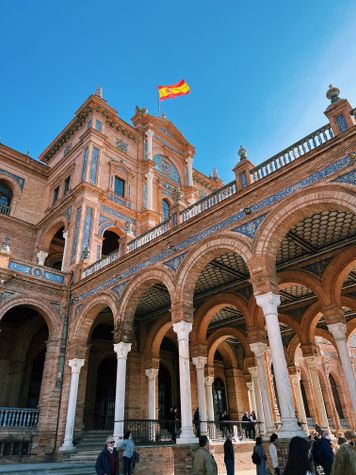
Plaza de España in the morning light — go early, before the tour groups arrive. Photo by Michael Giugliano on Pexels.
Why autumn is Seville’s best season
First, the weather. October in Seville is usually warm enough for short sleeves in the afternoon, with cooler, comfortable evenings. You can sit outside without hunting for shade, walk the river path without wilting, and still enjoy a rooftop drink at sunset. Second, the crowds thin out. The Alcázar, the cathedral, and Plaza de España are still popular, but the lines and the crush feel manageable in a way they rarely do in June or July.
Third, autumn is when Seville feels most like itself. Summer visitors are gone, students are back, flamenco tablaos are in full swing, and the city’s food calendar turns toward mushrooms, chestnuts, game, and hearty stews. If you want postcard weather and a city that is still living its normal life, this is the window.
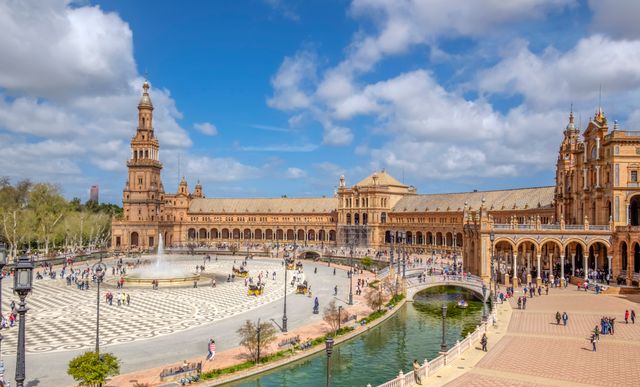
October skies in Seville are usually this blue — pack sunglasses, not just a jacket. Photo by Reinhard Bruckner on Pexels.
Day 1: Plaza de España, María Luisa Park, and the river
Start at Plaza de España, ideally before 10 a.m. Built for the 1929 Ibero-American Exposition, it is a vast semicircle of brick, tile, and bridges over a canal — and it is even more beautiful in person than in photos. Walk the full curve and look for the tiled alcoves: each one represents a different Spanish province, with a small painted scene and a map. Find yours, take the photo, and move on before the midday groups arrive.
From there, wander into María Luisa Park next door. It is Seville’s green lung: wide paths, fountains, ducks, and benches under palm and jacaranda trees. This is a perfect picnic or coffee-stop park, and a good place to reset if you are jet-lagged. In the late afternoon, walk to the Guadalquivir River and follow the path toward the Torre del Oro, the 13th-century gold tower that once guarded the port. Sunset over the river, with the Triana neighborhood across the water, is one of the city’s simplest pleasures — and it costs nothing.
Day 2: The old town — Santa Cruz, the cathedral, and the Alcázar
Day two is for the historic center, and it is best done on foot. Start in Santa Cruz, the old Jewish quarter, where whitewashed houses, orange trees, and tiny plazas create a maze that is genuinely pleasant to get lost in. Do not try to follow a rigid route here; pick a direction, duck down a side street when something catches your eye, and trust that you will find your way back to a main square eventually.
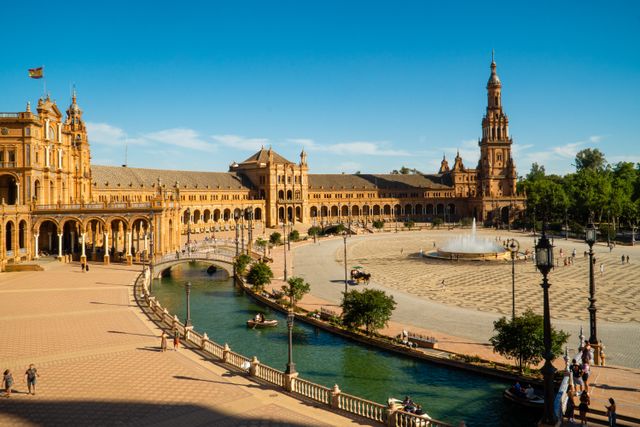
The old town rewards slow walking — every narrow street seems to open onto a small plaza. Photo by Jose Rodriguez Ortega on Pexels.
The Seville Cathedral is the largest Gothic cathedral in the world, and it earns that title. Give it at least an hour, and climb La Giralda, its bell tower, if you are comfortable with ramps rather than stairs — the tower was designed for horses, so the climb is a long slope, not a staircase. Next door, the Real Alcázar is a different world: Moorish courtyards, intricate tilework, carved ceilings, and gardens with fountains and peacocks. Book tickets for both in advance in autumn; same-day entry is possible, but timed entry saves a long wait.
Practical tip: wear your most comfortable walking shoes for this day. Santa Cruz is cobblestones and uneven lanes, and you will walk farther than you expect without noticing — until your feet remind you.
Day 3: Triana, flamenco, and a slow tapas evening
Cross the Isabel II bridge into Triana, Seville’s riverside neighborhood, famous for ceramics, flamenco, and a fiercely local identity. Visit the Triana market in the morning, browse the ceramic shops along Calle Alfarería, and stop for coffee in a neighborhood café rather than a tourist square. Triana is where Seville feels least performed and most lived-in.
In the evening, book a flamenco show — not a dinner-and-show package in a big hall if you can avoid it, but a smaller tablao where the singers, guitar, and dancers are close enough to feel. Flamenco is not background music; it is intense, emotional, and best experienced up close. Afterward, do tapas the local way: stand at the bar, order one or two small plates, finish your drink, and move to the next place. Three or four stops make a far better evening than one long, heavy restaurant meal.
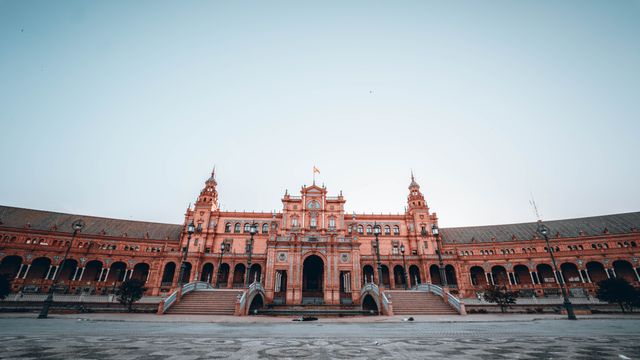
Evenings are for lingering — one small plate, one glass, then move on to the next bar. Photo by Jérémy Glineur on Pexels.
Where to eat without overthinking it
Seville’s food rule is simple: follow the locals, eat seasonally, and keep portions small. Try salmorejo (a thick, chilled tomato soup, richer than gazpacho), espinacas con garbanzos (spinach with chickpeas, a Seville classic), grilled prawns, and Iberian ham if your budget allows. For something sweet, look for torrijas — Spanish-style French toast, often served with honey — and, in autumn, chestnut desserts and warm churros with chocolate on a cool evening.
Two habits will save you money and disappointment. First, avoid restaurants with large photo menus right on the main squares; walk one street back and the quality usually rises while the price falls. Second, lunch is the main meal in Spain, and many places offer a good-value menú del día at midday. Eat well at lunch, snack lightly in the evening, and you will feel better for the next day’s walking.
Practical tips for an autumn trip
Packing: Layers are the answer. A light jacket for mornings and evenings, breathable clothes for warm afternoons, and one pair of broken-in walking shoes you trust. A small crossbody bag keeps your hands free on crowded streets and in markets.
Timing: Many shops and smaller sights close in the early afternoon for siesta, then reopen in the evening. Plan major sights for the morning, rest or linger over lunch in the middle of the day, and save neighborhoods and tapas for the evening — you will be moving with the city’s rhythm, not against it.
Getting around: The historic center is walkable, and that is the best way to see it. For longer distances, Seville has trams, buses, and bike-share. If you stay outside the center, check that your hotel is near a tram or bus line, not just near a famous sight.
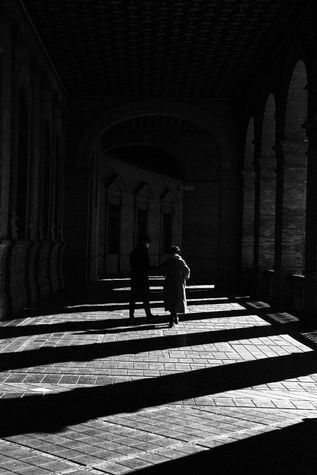
Seville’s shaded arcades and courtyards are made for unhurried exploring. Photo by Monica Mena Santos on Pexels.
Day trips, if you have a fourth day: Córdoba, with its extraordinary Mezquita, is under two hours by train. Cádiz, one of Europe’s oldest cities, offers sea air and a completely different Andalusian mood. Ronda, perched above a gorge, is dramatic but deserves a full day, not a rushed half-day.
The takeaway
Seville in autumn is not about ticking off sights as fast as possible. It is about warm light, long lunches, orange-scented streets, and evenings that stretch out over small plates and good conversation. Come for three days, walk slowly, eat seasonally, and leave room in the plan for the plaza you stumble on by accident — that is usually the one you remember best.
Have you been to Seville in autumn? Tell us in the comments which neighborhood you would start in — Santa Cruz, Triana, or Plaza de España first?
Travel picks for Seville in autumn
These are the pieces we would actually pack for this trip — comfortable, light, and useful on cobblestones and in markets.
- 🛒 Shop on Amazon → Anker Portable Charger, 10,000mAh 30W Power Bank
- 🛒 Shop on Amazon → Travelon Anti-Theft Metro Crossbody
- 🛒 Shop on Amazon → Rick Steves Spain (travel guidebook)
- 🛒 Shop on Amazon → Skechers Women’s Go Walk Travel Milan Hands Free Slip-Ins
- 🛒 Shop on Amazon → Repel Windproof Travel Umbrella
Leave a Reply